Weekend Kidding Marathon: 30 Hours at Happy Little Hooves Farm
March 13, 2025 · Shawn Sweeney
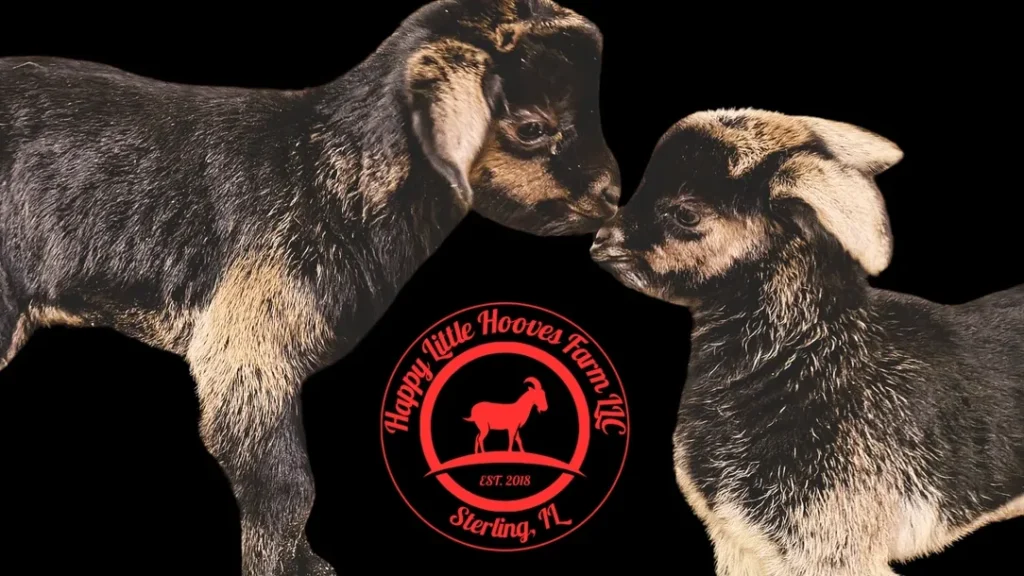
When people imagine raising goats, they often picture idyllic scenes of cute kids frolicking in green pastures. What many don’t realize is the intensity, dedication, and sometimes sleepless nights that come with kidding season. This past weekend at Happy Little Hooves Farm gave us a perfect example of the beautiful chaos that ensues when multiple does decide it’s time to bring new life into the world, all within a 30-hour window.
Saturday Evening: Hela Takes the Lead
It all started late Saturday evening when Hela, one of our Arapawa girls, decided it was time to deliver. As a first freshener (a first-time mother), we were especially attentive to her needs. After a relatively smooth labor, she brought a pair of twins into the world—one little girl and one boy.
What many newcomers to goat keeping don’t understand is that most of the real work begins after the birth itself. Our post-delivery routine at Happy Little Hooves Farm is methodical and essential:
- Help the new mother dry her kids
- Ensure the newborns get their first crucial colostrum milk
- Verify they have strong suckling reflexes
- Weigh each kid to establish a baseline for future health monitoring
- Trim the umbilical cords to an appropriate length
- Dip the cords in iodine to prevent infection
- Monitor the little family for several hours to ensure proper bonding and feeding
Throughout this process, we also watch vigilantly for the passing of the placenta. This step is critical—if a doe retains her placenta, it can lead to serious health complications. Some goats will actually eat their placenta if unmonitored, leaving you unaware if everything has been properly expelled.
By the time we got Hela and her twins settled into their clean stall, it was between 1-2 AM Sunday morning. Exhausted but satisfied, we headed inside for a quick bite and what we hoped would be a few hours of sleep.
Sunday Early Morning: No Rest for the Weary
Happy Little Hooves Farm is equipped with cameras in the kidding stalls—technology that proved invaluable that night. Around 4 AM, while checking the monitors, I noticed another doe, who wasn’t due for a few more days, showing telltale signs of early labor. She was restless, alternating between standing and lying down, pawing at the ground, and had that unmistakable “it’s almost time” expression that experienced goat keepers learn to recognize.
Sleep would have to wait a bit longer.
Sunday Evening: Elvira’s Turn
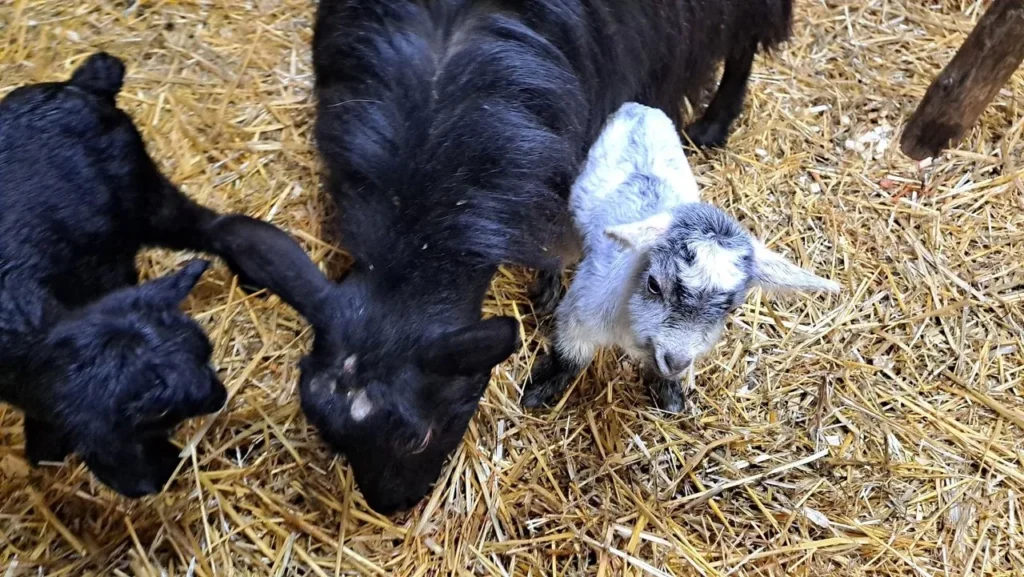
By Sunday evening, Elvira, our Mini Silky Fainter, had progressed to active labor. Her delivery went smoothly, rewarding us with two beautiful, healthy girls. Once again, we initiated our post-birth protocol, drying the kids, ensuring their first feeding, and all the other essential steps to give these new lives the best possible start.
The Plot Thickens: Peanut’s Hormonal Adventure
Meanwhile, in another stall, we had Peanut, our Mini Lamancha, sharing space with her daughter Aurora, who had given birth a few days prior. This arrangement had been working well—until now. After witnessing both Hela and Elvira deliver their kids, something remarkable happened with Peanut.
Though she was pregnant herself and not due for several more days, Peanut’s maternal hormones went into overdrive. To our astonishment, she began softly calling to Aurora’s kids, licking them affectionately, and—most surprisingly—allowing them to nurse from her. This unexpected development created an immediate housing crisis!
Around 11 PM Sunday, with no larger stalls available, I had to move Peanut into a separate enclosure I had constructed with pallets a few weeks earlier. Though it hadn’t been cleaned out yet and wasn’t fully prepared for a new mother, the urgency of the situation left no time for proper preparations. Peanut would have to make do with the space as it was, given her rapidly approaching labor.
Monday Early Morning: The Final Act
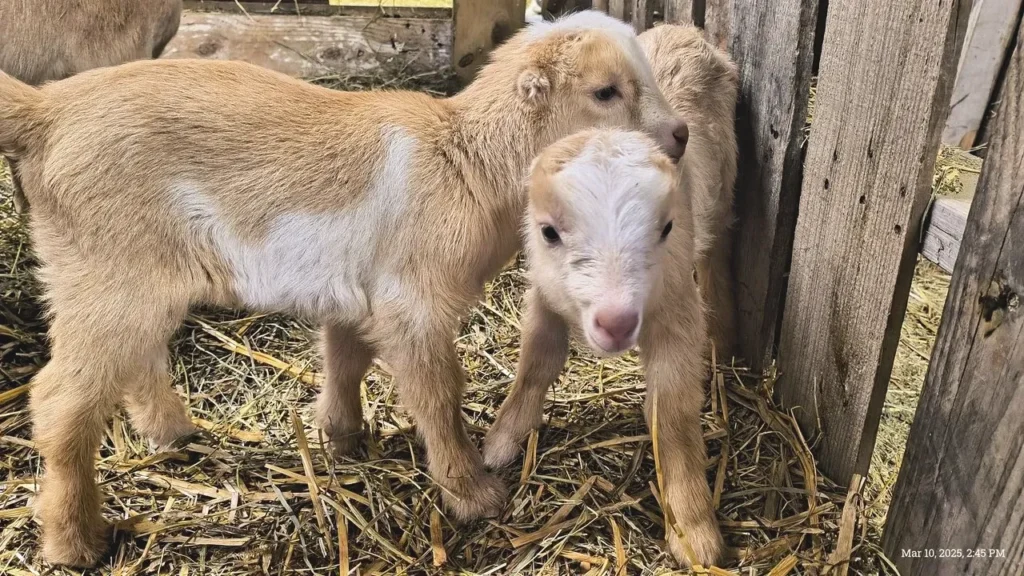
Sure enough, at 12:00 AM Monday morning, Peanut went into full blown labor several days ahead of her due date. Her delivery rewarded us with twin boys, bringing our 30-hour kidding marathon to a close with a perfect symmetry: we began with boy/girl twins from Hela, continued with twin girls from Elvira, and concluded with twin boys from Peanut.
Reflections on Kidding Season at Happy Little Hooves Farm
These intense periods are exhausting but deeply rewarding. They remind us that working with livestock means being ready to adapt at a moment’s notice and that nature operates on its own schedule, not ours. The miraculous process of birth, the unique personalities of each breed—from our rare Arapawa to our Mini Silky Fainters and Mini Lamanchas—and the wonder of new life make every sleepless night worthwhile.
For those considering raising goats, remember that the cute baby goat videos you see online represent just a fraction of the experience. The real journey involves midnight monitoring, quick thinking, and a deep commitment to the wellbeing of your herd. But for those who embrace it, there’s nothing quite like the satisfaction of witnessing and supporting these incredible animals through one of nature’s most profound processes.
Shawn Sweeney
Follow our journey at Happy Little Hooves Farm as we continue our mission to preserve critically endangered Arapawa goats and provide loving care to special needs animals. Each day brings new adventures, challenges, and joy in working with these remarkable creatures.
Leave a Reply